






AI Bias Detection and Mitigation
Data bias, algorithmic bias, deployment bias — they're different problems with different solutions. Here's how to detect and fix each type.
 Víctor Mollá2 min read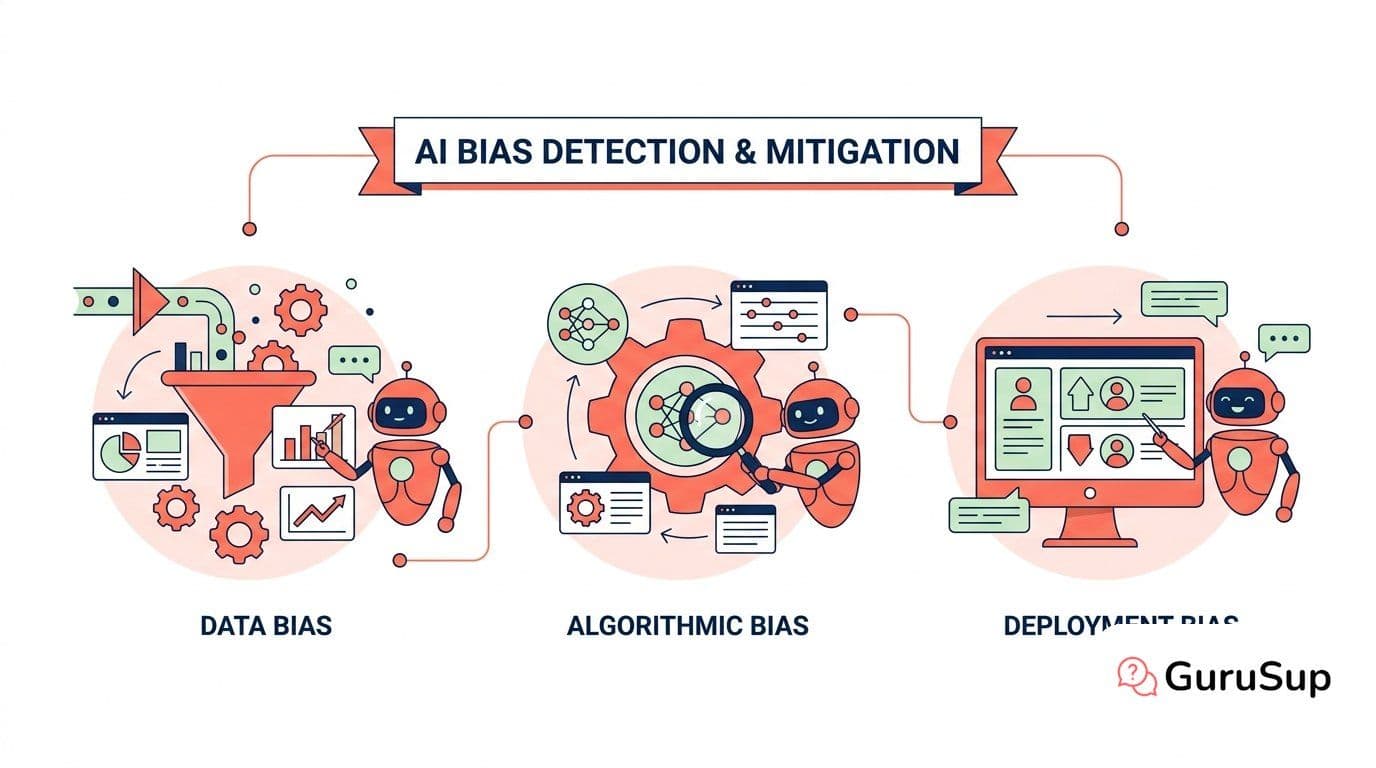
Three Types of Bias You're Probably Ignoring
Bias in AI isn't one problem. It's at least three, and each requires different detection methods and different fixes.
- Data bias: Your training data doesn't represent the population your model serves. Historical hiring data that underrepresents women will produce a model that undervalues female candidates. No algorithm fix can fully compensate for broken data.
- Algorithmic bias: The model itself amplifies patterns in ways that create unfair outcomes. Even with balanced data, certain architectures and optimization targets can produce disparate impact across groups.
- Deployment bias: The model works fine in testing but fails for specific populations in production. Different usage patterns, infrastructure access, or context make the model perform unevenly.
Detection Methods That Work
Turn customer support into loyalty and referrals with GuruSup
Soporte con IA que escala sin perder cercanía. Demo de 20 min.
Detection starts before you train:
- Data audits: Statistical analysis of your training data. Check representation across protected categories. Look at label distributions per group.
- Fairness metrics: Equalized odds, demographic parity, calibration across groups. Pick metrics that match your use case — there's no universal fairness metric.
- Adversarial testing: Red-team your model with edge cases targeting known bias vectors. Synthetic data augmentation can reveal blind spots.
- Production monitoring: Track model performance disaggregated by demographic groups. A model that's 95% accurate overall might be 70% accurate for a specific population.
Mitigation Strategies
Pre-processing: Fix the data. Re-sample underrepresented groups, remove proxy variables, use synthetic data to balance datasets.
In-processing: Add fairness constraints to your training objective. Techniques like adversarial debiasing or fairness-aware regularization adjust the learning process itself.
Post-processing: Adjust model outputs to meet fairness thresholds. Calibration across groups, threshold adjustment per demographic. This is a band-aid — it's better to fix upstream problems.
Building a Bias Response Plan
When you find bias (and you will), you need a plan. Define severity levels, notification requirements, and remediation timelines. A biased content recommendation is annoying. A biased parole prediction ruins lives. Your response should match the stakes.
Bias detection is one piece of your risk assessment process. For the complete governance picture, visit the AI Governance hub.