AI Governance Framework: Step-by-Step
Build an AI governance framework in 4 phases. From risk assessment to continuous monitoring, here's how enterprises implement governance that actually works.
 Víctor Mollá2 min read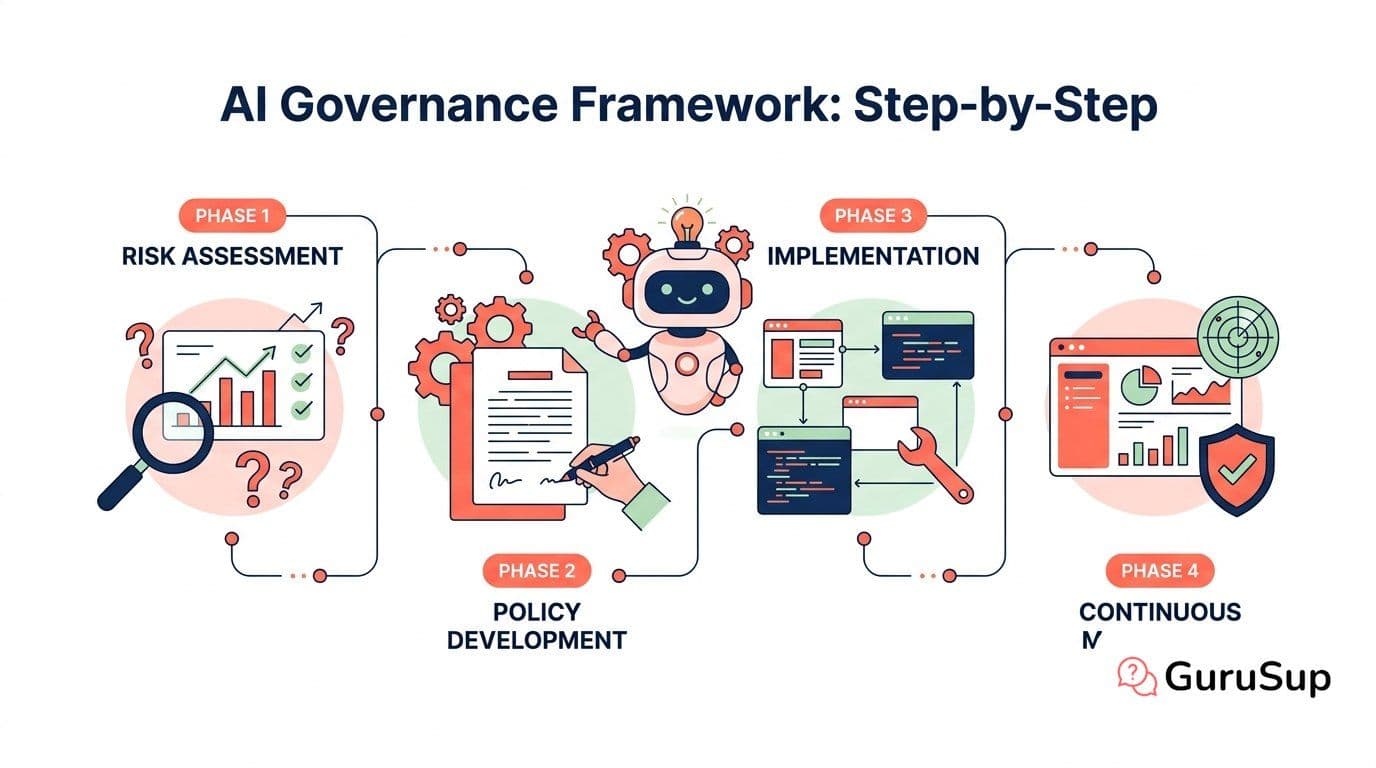
Why Frameworks Fail
Most AI governance frameworks die in a committee. They become 80-page PDFs that nobody reads, filled with principles nobody measures. The problem isn't ambition — it's sequence. You need to build governance in phases, starting with what hurts most.
Phase 1: Discover and Classify
Start with a complete inventory of your AI systems. This includes anything from a simple recommendation engine to a complex fraud detection model. For each system, document: what it does, what data it consumes, who built it, and who uses the output.
Then classify by risk. The EU AI Act gives you a solid starting point with four tiers: minimal, limited, high, and unacceptable risk. Map every system to a tier. High-risk systems get more oversight, more documentation, and more frequent audits.
Turn customer support into loyalty and referrals with GuruSup
Soporte con IA que escala sin perder cercanía. Demo de 20 min.
Phase 2: Define Policies and Ownership
For each risk tier, define minimum requirements. High-risk systems need model cards, bias testing, human oversight, and incident response plans. Low-risk systems might only need basic documentation and periodic reviews.
Assign owners. Not teams — individuals. The model owner is responsible for performance, compliance, and incident response. This person has authority to pause or shut down the system.
Phase 3: Implement Controls
- Pre-deployment: Bias testing, security review, data quality validation, privacy impact assessment.
- In production: Performance monitoring, drift detection, fairness metric tracking, automated alerts.
- Post-incident: Root cause analysis, stakeholder communication, remediation plans, policy updates.
Automate what you can. Manual reviews don't scale when you have 50+ models in production.
Phase 4: Monitor and Iterate
Governance is a living system, not a document. Schedule quarterly reviews of your AI inventory. Retrain your risk classifications as regulations evolve. Track governance KPIs: time to approve new models, incident frequency, audit pass rates.
Need help getting started? Our risk assessment guide covers the classification process in detail. For the full picture, visit the AI Governance hub.