






Top AI Governance Tools 2026
Enterprise, mid-market, and built-in governance tools compared. What to look for, what to avoid, and how to choose the right tool for your maturity level.
 Víctor Mollá2 min read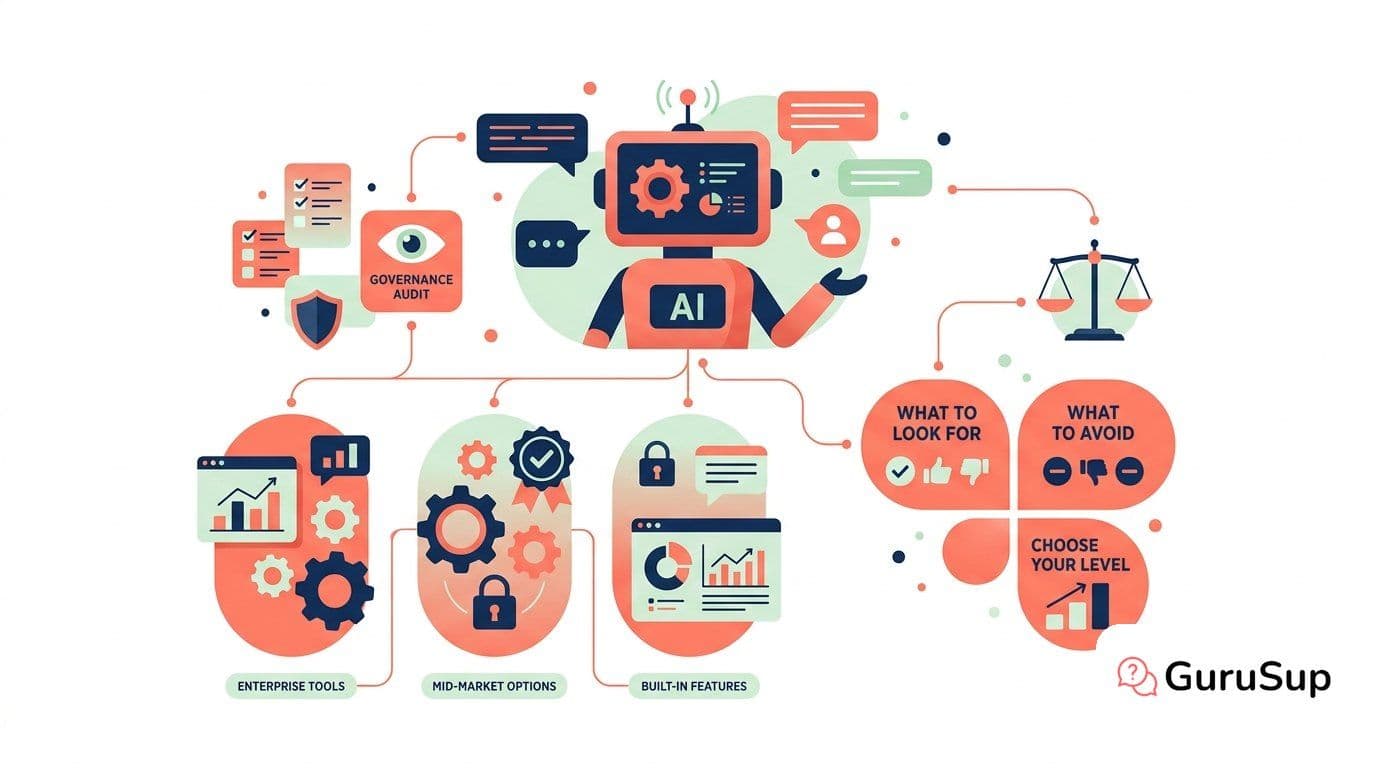
The Tool Market in 2026
The AI governance tool market has matured fast. In 2024, most companies stitched together spreadsheets and custom scripts. In 2026, there are dedicated platforms for every budget and maturity level. The challenge isn't finding tools — it's picking the right one.
Enterprise Platforms
For organizations with 100+ AI models and dedicated governance teams:
- IBM OpenPages with Watson: Full GRC platform with AI-specific modules. Strong on risk assessment and regulatory mapping. Integrates with Watson AI for automated documentation.
- ServiceNow AI Governance: Built into the Now Platform. Model inventory, risk scoring, approval workflows. Best if you're already a ServiceNow shop.
- OneTrust AI Governance: Privacy-first approach. Strong on data governance and compliance. Good for organizations where privacy is the primary governance concern.
Turn customer support into loyalty and referrals with GuruSup
Soporte con IA que escala sin perder cercanía. Demo de 20 min.
Mid-Market Solutions
For companies with 10-100 models and lean teams:
- Credo AI: Purpose-built for AI governance. Policy packs for EU AI Act, NIST AI RMF. Clean interface, fast to deploy.
- Holistic AI: Bias auditing, risk management, and compliance in one platform. Strong technical depth without enterprise complexity.
- Monitaur: Model monitoring with built-in governance. Good for teams that want monitoring and governance in one tool.
Built-In and Open Source
For teams starting out or with strong engineering capabilities:
- MLflow + custom governance layer: Open-source model tracking that you extend with governance metadata. Maximum flexibility, maximum effort.
- Google Model Cards Toolkit: Free tooling for generating model cards. Pairs well with Vertex AI's built-in governance features.
- Microsoft Responsible AI Toolkit: Fairlearn for bias detection, InterpretML for explainability. Best for Azure-native organizations.
Better customer support starts with GuruSup
Soporte con IA que escala sin perder cercanía. Demo de 20 min.
How to Choose
Match the tool to your maturity:
- Just starting: Use open-source tools and focus on model inventory and basic documentation. Don't buy enterprise software when you have 5 models.
- Growing: Mid-market platforms give you structure without the complexity. Look for EU AI Act compliance features — you'll need them.
- Mature: Enterprise platforms make sense when you have dedicated governance staff and complex regulatory requirements across jurisdictions.
Avoid tools that promise fully automated governance. Governance requires human judgment — tools support it, they don't replace it.
Before picking tools, make sure you have a solid governance framework and clear risk assessment process. Explore more at the AI Governance hub.