






CAIO vs CTO: Do You Need Both?
CAIO owns AI strategy, CTO owns technology infrastructure. Learn where the roles overlap, when you need both, and how to structure reporting lines.
 Víctor Mollá2 min read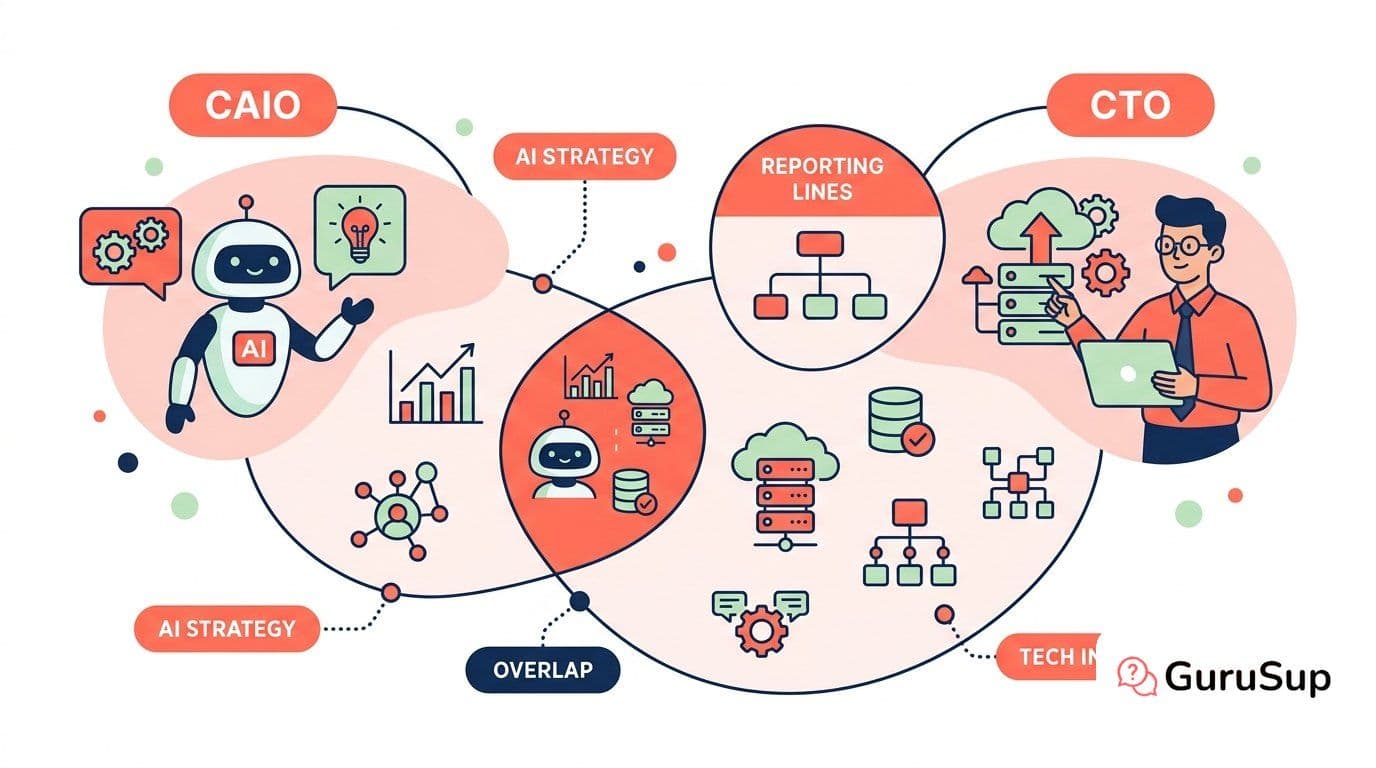
Two Roles, Different Mandates
The Chief AI Officer and Chief Technology Officer often get confused because both deal with technology. But their mandates are fundamentally different. A CTO owns the technology stack. A CAIO owns the AI strategy. The CTO asks 'how do we build it?' The CAIO asks 'what should AI do for this business?'
In practice, the boundary matters. Here's where they overlap, where they diverge, and when you need both.
CTO Responsibilities
- Technology infrastructure and architecture decisions.
- Engineering team leadership and technical hiring.
- System reliability, security, and scalability.
- Technical debt management and platform modernization.
- Build vs. buy decisions for all technology, not just AI.
CAIO Responsibilities
- AI-specific strategy tied to business outcomes.
- Model governance, bias monitoring, and compliance with AI regulations.
- AI vendor evaluation and partnership management.
- Cross-departmental AI adoption and change management.
- AI ethics policy and responsible deployment frameworks.
For a complete breakdown, see the CAIO job description.
Where They Overlap
Both roles care about:
- Data infrastructure quality (the CAIO needs it, the CTO builds it).
- Cloud and compute resource allocation.
- Technical talent pipelines.
- Security considerations for AI models and data.
The overlap creates friction if reporting lines aren't clear. Successful organizations define boundaries early and create shared governance for contested areas like data platform investment.
When You Need Both
You probably need a dedicated CAIO when:
- AI spending exceeds $5M annually.
- You have more than 20 people working on AI-related projects.
- AI regulatory compliance requires dedicated executive attention.
- Your CTO is already stretched across infrastructure, security, and product engineering.
- AI is becoming a core part of your product, not just an internal tool.
When One Role Is Enough
A CTO can absorb CAIO duties when:
- AI projects are limited to 1-2 use cases.
- The company has fewer than 500 employees.
- AI is used internally but isn't part of the product.
- Regulatory exposure to AI-specific laws is minimal.
Making It Work
Companies like Meta and Google have both roles reporting to the CEO. Mid-market companies often have the CAIO report to the CTO initially, then move to a direct CEO report as AI becomes more strategic.
The critical success factor is clear ownership. The CAIO owns AI outcomes and governance. The CTO owns the platforms those outcomes run on. Build a team structure that reflects this split.
For related reading, see our AI governance framework.