






How to Become a Chief AI Officer
Career paths to the CAIO role: common backgrounds, essential experience, executive programs at Stanford and MIT, and how to build the right profile.
 Víctor Mollá3 min read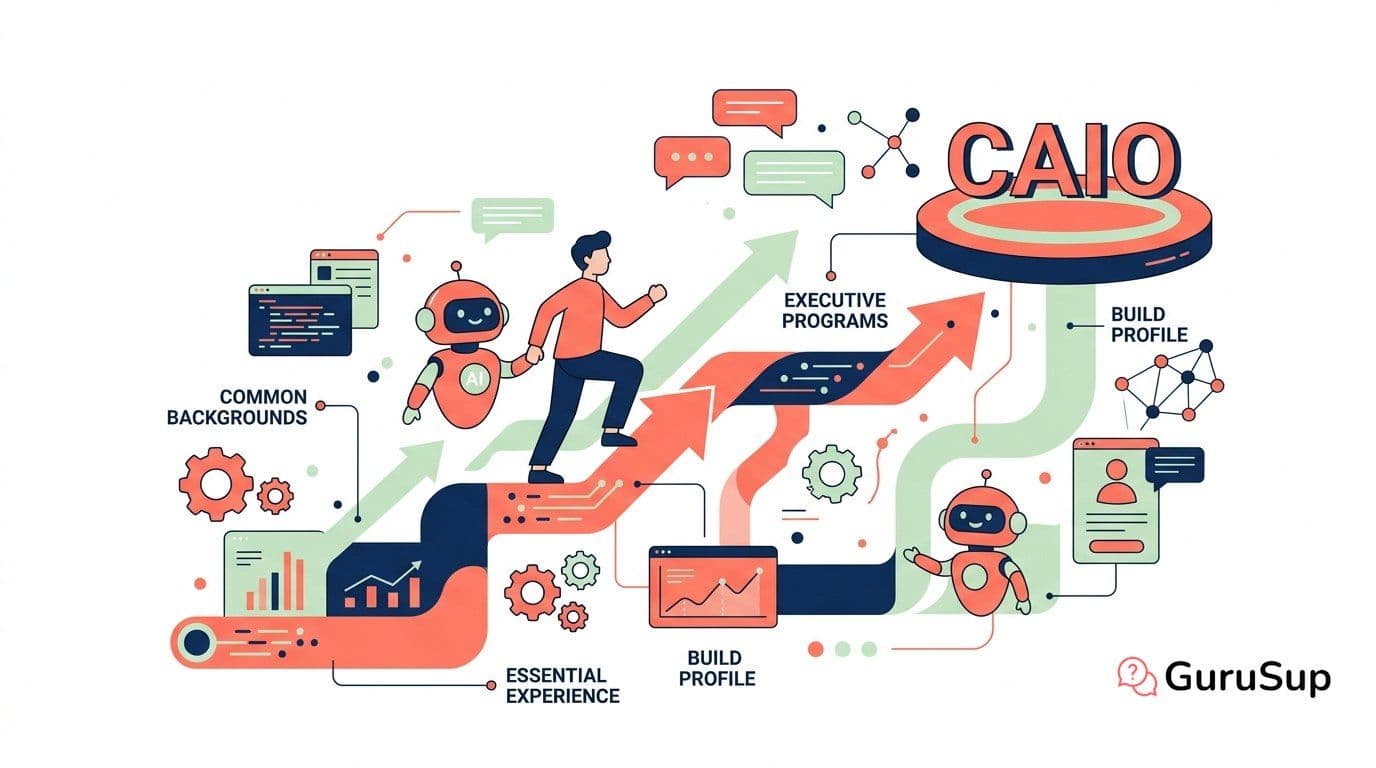
The Path Is Not Linear
There is no single route to becoming a Chief AI Officer. The role didn't exist at most companies five years ago, so there's no established pipeline. What you'll find is a pattern: successful CAIOs combine technical AI experience, business leadership, and regulatory awareness built over 15-20 years.
Common Career Backgrounds
CAIOs in 2026 typically come from one of these tracks:
- ML/AI research to VP Engineering: Started in research labs, moved into applied ML leadership, then broadened to business strategy.
- Data science to Chief Data Officer: Built analytics teams, expanded into ML, then took on AI strategy at the executive level.
- Management consulting + technical depth: Strategy consultants at McKinsey, BCG, or Bain who specialized in AI transformation, then went client-side.
- Product leadership in AI-first companies: VP Product at companies where AI is the product, giving them both technical and business context.
Essential Experience
Regardless of your starting point, you'll need:
- Production AI deployment: You must have shipped AI systems that real users or customers relied on. Academic research alone doesn't count.
- P&L or budget ownership: Experience managing budgets over $5M shows you can handle the financial side of the role.
- Cross-functional leadership: Proven ability to work across engineering, product, legal, and business teams.
- Board or executive communication: Translating technical AI concepts for non-technical stakeholders.
- Regulatory navigation: Practical experience with AI compliance, data privacy, or ethics frameworks.
Education and Certifications
Most CAIOs hold advanced degrees, but the specific degree matters less than you'd think.
Degree Paths
- PhD in CS, ML, or related field: Common but not required. Roughly 60% of current CAIOs have a PhD.
- MBA + technical background: Increasingly valued as the role becomes more business-facing.
- MS in Data Science or AI: Sufficient when combined with strong industry experience.
Executive Programs
Several programs specifically target aspiring AI executives:
- Stanford HAI Executive Education: Focused on AI strategy and governance for senior leaders.
- MIT Sloan AI Strategy: Combines technical AI foundations with business application.
- Chicago Booth AI for Business Leaders: Emphasis on AI-driven business transformation.
- INSEAD AI for Business: European perspective on AI leadership and regulation.
Building Your Profile
Beyond credentials, the following activities build credibility:
- Publish on AI strategy topics. Not code tutorials. Write about AI governance, organizational design, or ROI frameworks.
- Speak at business conferences, not just tech ones. Target audiences of CEOs and board members.
- Serve on AI ethics boards or advisory committees.
- Build a track record of measurable AI business impact at your current organization.
The Jump to CAIO
The final move usually happens in one of two ways: internal promotion (a VP of AI or CDO gets elevated) or external hire (a company creates the role and recruits someone with the right combination of skills).
Understanding the full scope of CAIO responsibilities helps you identify gaps in your experience. For salary expectations, review the 2026 compensation guide. And to see what it looks like in practice, explore the first 90 days as a CAIO.