






EU AI Act vs GDPR: How They Work Together
How the EU AI Act and GDPR interact: where they overlap, where they differ, and strategies for dual compliance when your AI processes personal data.
 Víctor Mollá5 min read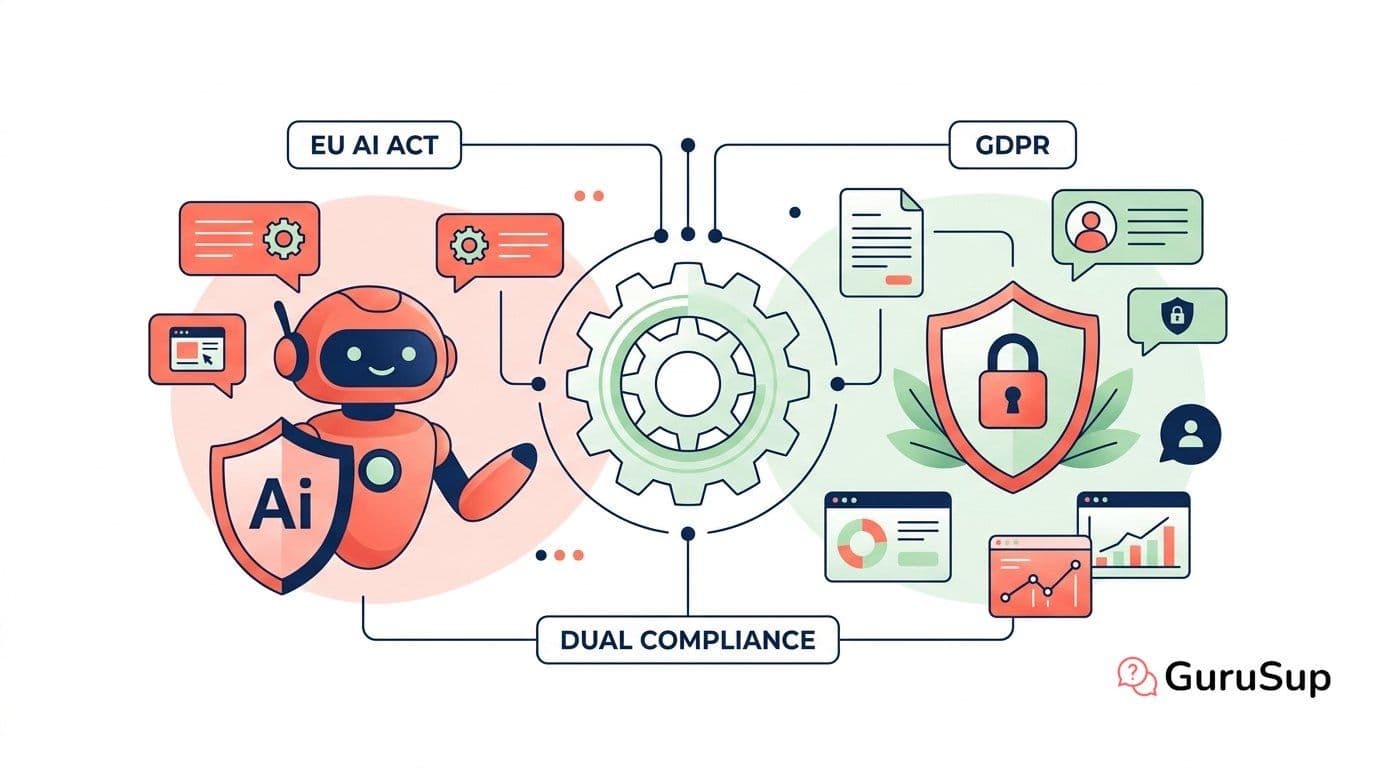
If your AI system processes personal data within the EU, you now answer to two regulations: GDPR (in force since 2018) and the EU AI Act (phasing in through 2027). They are not alternatives. They stack. A single AI deployment can trigger obligations under both, enforced by different authorities with separate penalty structures.
This is not theoretical complexity. A recruitment AI that screens resumes is simultaneously a high-risk AI system under the AI Act and a personal data processing activity under GDPR. Miss either set of requirements and you face fines from two directions.
Where They Overlap
Data quality and governance
GDPR Article 5 requires personal data to be accurate, adequate, and relevant. The AI Act Article 10 requires training data to be relevant, representative, and as error-free as achievable. Both push toward the same goal from different angles: GDPR protects individual data rights, the AI Act protects against biased or unreliable AI output.
In practice: your data governance framework needs to satisfy both. Document data provenance, quality measures, and bias mitigation for the AI Act. Maintain lawful basis, purpose limitation, and data minimization for GDPR.
Transparency
GDPR Articles 13-14 require informing data subjects about automated decision-making and profiling. The AI Act requires transparency about AI system capabilities, limitations, and the fact that users are interacting with AI.
The overlap is real but not complete. GDPR transparency focuses on what happens to personal data. AI Act transparency focuses on the nature and behavior of the AI system itself.
Automated decision-making
GDPR Article 22 gives individuals the right not to be subject to decisions based solely on automated processing that produce legal or significant effects. The AI Act's human oversight requirements (Article 14) for high-risk systems serve a similar function: ensuring meaningful human involvement in consequential decisions.
If your system makes automated decisions about people using their personal data, both Article 22 of GDPR and the high-risk requirements of the AI Act likely apply simultaneously.
Where They Differ
Scope
GDPR applies to personal data processing. Period. If your AI system does not process personal data (analyzing weather patterns, optimizing logistics routes with anonymized data), GDPR does not apply. The AI Act can still apply based on the system's risk classification, regardless of whether personal data is involved.
Risk approach
GDPR uses a rights-based approach centered on the data subject. The AI Act uses a risk-based approach centered on the AI system's potential for harm. GDPR asks: what are this person's rights regarding their data? The AI Act asks: how dangerous is this AI system?
Enforcement bodies
GDPR is enforced by national data protection authorities (DPAs). The AI Act is enforced by national market surveillance authorities and the European AI Office. These are typically different entities, though some member states may designate the DPA for both roles.
Penalty structures
GDPR: up to 20 million euros or 4% of global turnover. AI Act: up to 35 million euros or 7% of global turnover. The AI Act penalties are steeper at the top end. And they can stack. See our AI Act penalties guide.
Dual Compliance Strategies
Unified data governance
Build one data governance framework that covers both. Your training data documentation for the AI Act should include GDPR-required information: lawful basis, data subject categories, retention periods. Your GDPR records of processing should reference AI-specific data quality measures.
Integrated impact assessments
GDPR requires Data Protection Impact Assessments (DPIAs) for high-risk processing. The AI Act requires risk management systems for high-risk AI. Run them together. A DPIA that also addresses AI-specific risks (bias, accuracy, robustness) satisfies both requirements more efficiently than two separate processes.
Transparency notices that cover both
When informing users, combine AI Act disclosure ("you are interacting with AI") with GDPR transparency ("here is how your personal data is processed, your rights, and how to exercise them"). One notice, both regulations covered.
Human oversight as both Article 22 safeguard and Article 14 compliance
The human-in-the-loop mechanisms you build for AI Act compliance can simultaneously serve as the "suitable safeguards" required by GDPR Article 22 for automated decisions. Design them once to satisfy both.
Common Pitfalls
- Treating them as separate projects. Two separate compliance teams doing overlapping work doubles the cost and creates inconsistencies.
- Assuming GDPR compliance covers the AI Act. It does not. GDPR has nothing about conformity assessment, CE marking, or AI-specific technical documentation.
- Ignoring the AI Act because your system does not process personal data. The AI Act's scope is broader. Risk classification applies regardless of data type.
- Forgetting that consent under GDPR does not exempt you from AI Act obligations. Even if users consent to data processing, high-risk AI requirements still apply.
Practical Next Steps
Start with a joint audit: map each AI system against both GDPR processing records and AI Act risk classification. Identify systems that trigger obligations under both. For those, build unified compliance documentation.
The compliance checklist covers AI Act requirements step by step. Layer GDPR requirements on top where personal data is involved.
For the broader regulatory picture, see our EU AI Act summary and the AI governance signal hub.