





AI Models in 2026: Which One Should You Actually Use?
The AI model landscape in 2026 has four frontier contenders. This hub breaks down what each does best and links to every detailed head-to-head comparison.

Updated: June 22, 2026

The AI landscape in 2026 looks nothing like it did two years ago. Four frontier models now compete across coding, reasoning, writing, and business automation — and none of them wins everything.
This page gives you the high-level picture. For the deep dives, we wrote dedicated head-to-head comparisons you can read below.
AI Models at a Glance: 2026 Overview
Here is where the four frontier models stand right now:
Category | GPT-5.4 | Claude Opus 4.6 | Gemini 3.1 Pro | Grok 4
Coding | Strong (74.9% SWE-bench) | Strong (74%+, powers Cursor) | Good (63.8%, 1M context) | Leader (75%)
Reasoning | 92.8% GPQA | 91.3% GPQA | Leader (94.3% GPQA) | Competitive
Writing | Good (Canvas editor) | Leader (128K output, natural prose) | Good (Docs integration) | Uncensored style
Multimodal | Vision + audio + computer use | Vision + tool use | Leader (video, audio, 1M context) | Vision + real-time X data
API Price (in/out per 1M) | $2.50/$15 | $15/$75 (Opus), $3/$15 (Sonnet) | $2/$12 | $2/$15
Consumer Plan | $20/mo (Plus) | $20/mo (Pro) | $19.99/mo (Advanced) | $22/mo (X Premium+)
No single model dominates every row. That is the defining feature of 2026: specialization.
Which AI Model Should You Choose?
The answer depends on your primary use case. Here is a simplified decision tree:
- You write code most of the day — Claude or Grok lead SWE-bench. Claude powers the two most popular AI coding editors (Cursor, Windsurf). Grok leads raw benchmarks. Read our Best AI for Coding guide for the full breakdown.
- You need research and deep reasoning — Gemini 3.1 Pro leads pure benchmarks. Claude catches up when tools are involved. Both are excellent for academic and scientific work.
- You write content or long documents — Claude produces the most natural prose and can output 128K tokens in a single pass. GPT-5.4's Canvas is the best editing environment.
- You want real-time information — Grok 4 with live X/Twitter data. Perplexity also excels here with its search-native approach.
- You are budget-conscious — Gemini 3.1 Pro offers the cheapest API output. Claude Sonnet 4.6 gives 98% of Opus quality at a fraction of the cost.
- You run a business — The model matters less than the system around it. AI agents that orchestrate multiple models outperform any single chatbot.
Read the Full Comparisons
We tested each matchup in depth. These dedicated articles cover benchmarks, pricing, real-world tasks, and honest verdicts:
- Claude vs ChatGPT: Full 2026 Comparison — The two most popular AI assistants, head to head.
- Gemini vs ChatGPT: Full 2026 Comparison — Google's flagship against OpenAI's.
- Perplexity vs ChatGPT: Full 2026 Comparison — Search-native AI vs the generalist.
- DeepSeek vs ChatGPT: Full 2026 Comparison — The open-source challenger from China.
- Claude vs Gemini: Full 2026 Comparison — Anthropic vs Google at the frontier.
- Claude vs ChatGPT vs Gemini: Three-Way Comparison — All three tested side by side.
- Gemini CLI vs Claude Code: Developer Tools Compared — Terminal-native AI coding tools.
- ChatGPT Plus vs Pro: Which Plan Is Worth It? — OpenAI's two paid tiers dissected.
- Grok vs ChatGPT vs Claude vs Gemini: Four-Way Battle — Every frontier model in one test.
- Best AI for Coding 2026 — Ranking every AI coding tool by real developer tasks.
AI Models for Business: What Actually Matters
Here is what most comparison articles get wrong: for business use, the model is the least important variable.
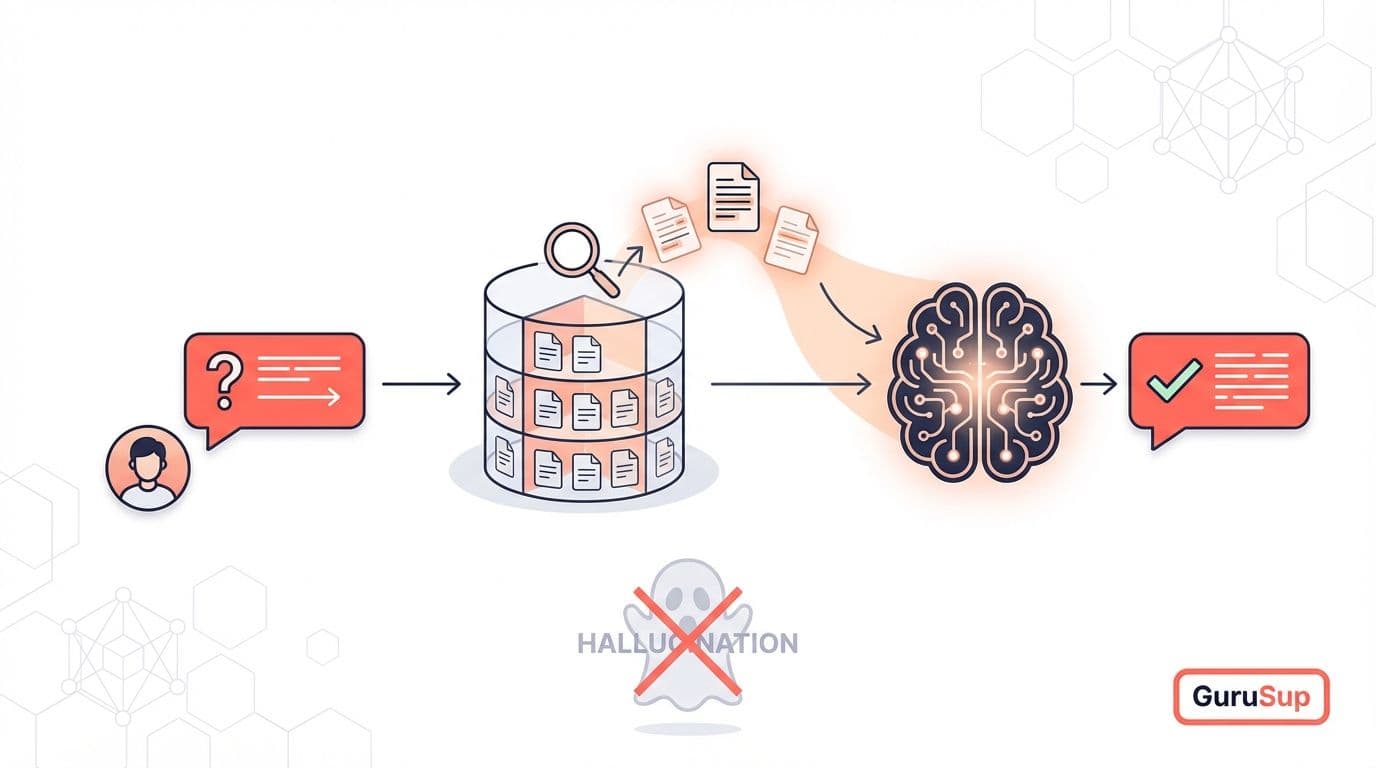
What matters is the system around the model. A well-designed AI agent that routes queries, pulls from your knowledge base, and escalates to humans at the right moment will outperform a raw frontier model every time.
Companies that deploy AI agents for customer service, sales, and internal support see 40-60% automation rates regardless of which underlying model they use. The orchestration layer — not the model — determines ROI.
GuruSup builds AI agents that work with any frontier model. If you want to see what that looks like for your business, talk to our team or explore our AI chatbot platform.
Frequently Asked Questions
What is the best AI model in 2026?
There is no single best model. Grok 4 and Claude Opus 4.6 lead coding benchmarks. Gemini 3.1 Pro leads reasoning. Claude writes the most natural prose. GPT-5.4 is the best all-rounder with the largest ecosystem. The right choice depends entirely on your primary use case.
Are AI models good enough for customer service?
Yes. Frontier models in 2026 handle complex, multi-turn customer conversations with high accuracy. The key is deploying them as part of an AI agent system — not as a raw chatbot. AI agents add routing, knowledge retrieval, and human escalation, which makes the underlying model's limitations irrelevant for most support scenarios.
Which AI is best for coding?
Grok 4 leads raw SWE-bench scores (75%), followed closely by GPT-5.4 (74.9%) and Claude Opus 4.6 (74%+). In practice, Claude dominates the developer tooling ecosystem — it powers Cursor, Windsurf, and Claude Code. Read our complete coding AI guide for detailed benchmarks and tool recommendations.