






How to Create an AI Ethics Board
A practical guide to building an AI ethics board that actually influences decisions. Composition, charter, responsibilities, and common pitfalls to avoid.
 Víctor Mollá2 min read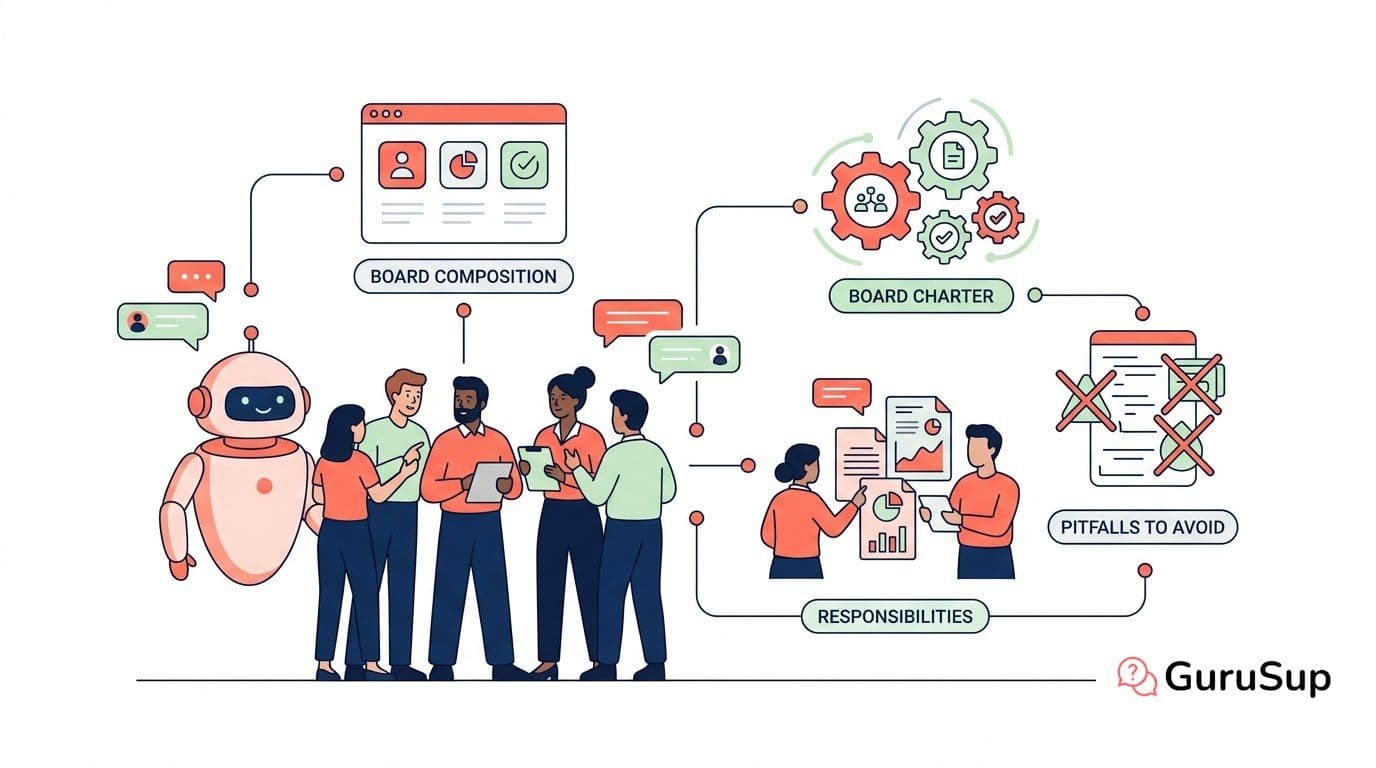
Ethics Boards That Actually Work
Most corporate AI ethics boards are performative. They meet quarterly, review nothing binding, and exist primarily for press releases. The boards that work share three traits: they have decision-making authority, they include people outside the company, and they review real systems before deployment.
Composition: Who Belongs
A functional ethics board needs diversity of expertise, not just demographic diversity (though that matters too):
Turn customer support into loyalty and referrals with GuruSup
Soporte con IA que escala sin perder cercanía. Demo de 20 min.
- Technical members: ML engineers and data scientists who understand model internals. They translate business concerns into technical requirements.
- Legal/compliance: Someone who knows GDPR, the EU AI Act, and your industry's specific regulations.
- Domain experts: If your AI touches healthcare, you need clinicians. Finance? You need risk managers.
- External members: Academics, civil society representatives, or affected community members. They provide perspectives your employees can't.
- Executive sponsor: A C-level champion who ensures the board's recommendations get implemented, not filed away.
Aim for 7-9 members. Fewer than 5 lacks diversity of thought. More than 12 becomes unmanageable.
The Charter: What It Must Include
- Scope: Which AI systems fall under review? All of them, or only high-risk?
- Authority: Can the board block deployments, or only recommend? Boards without teeth are decoration.
- Cadence: Monthly reviews for active projects, with emergency sessions for incidents.
- Escalation: What happens when the board and a business unit disagree?
Common Pitfalls
The biggest failure mode is creating a board with no power. If product teams can ignore the board's recommendations, they will. The second pitfall: reviewing systems after launch. By then, fixing problems costs 10x more and the damage is done.
Third: treating the board as a one-time approval stamp. Ethical review is continuous. Models drift, populations change, and new risks emerge that didn't exist at launch.
Pair your ethics board with a solid governance framework and proper model documentation. Explore more at our AI Governance hub.